
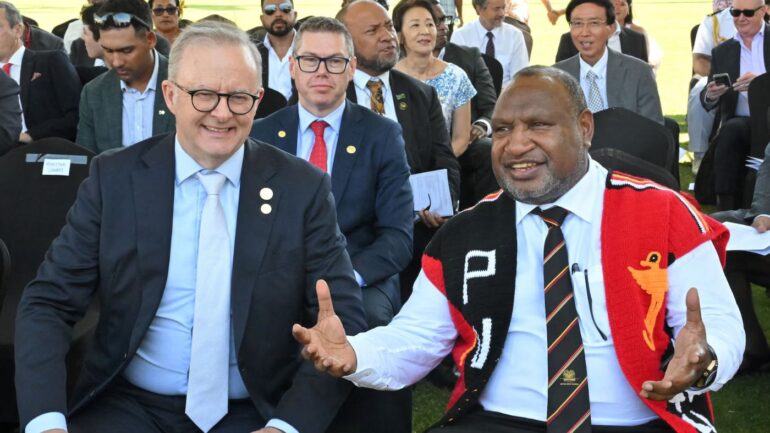
Australia’s bid to secure a landmark defence treaty with Papua New Guinea has collapsed at the eleventh hour, in what’s being described as a major diplomatic embarrassment for the Albanese government.
Anthony Albanese travelled to Port Moresby expecting to sign the agreement, but PNG’s Prime Minister James Marape pulled out at the last minute after failing to secure enough cabinet support.
On Wednesday afternoon’s episode of The Briefing, we sat down with Pacific diplomatic expert Mihai Sora to unpack what led to the failed deal, and what it means for Australia’s strategic future.
“Well, certainly Prime Ministers Albanese and James Marape did not see this coming,” Sora said.
“They both fully expected to sign a historic defence treaty between Australia and Papua New Guinea today,” she added.
The dramatic turnaround has raised fresh concerns about Australia’s influence in the Pacific and handed Beijing an unexpected advantage.
Opposition leaders have labelled it “a foreign policy embarrassment.”
The treaty included mutual defence commitments, closer integration of defence forces, and a recruitment pathway for Papua New Guineans into the Australian Defence Force.
It also contained provisions that would have excluded China from pursuing similar security and infrastructure deals.
“These are issues that directly touch on Papua New Guinea’s sovereignty and critically would change its non-aligned status.”
Subscribe to The Briefing, Australia’s fastest-growing news podcast on LiSTNR today. The Briefing serves up the latest news headlines and a deep dive into a topic affecting you. All in under 20 minutes.